A very British transport disconnect
Following a historic ferry route by public transport highlights a very modern problem: nothing quite lines up.

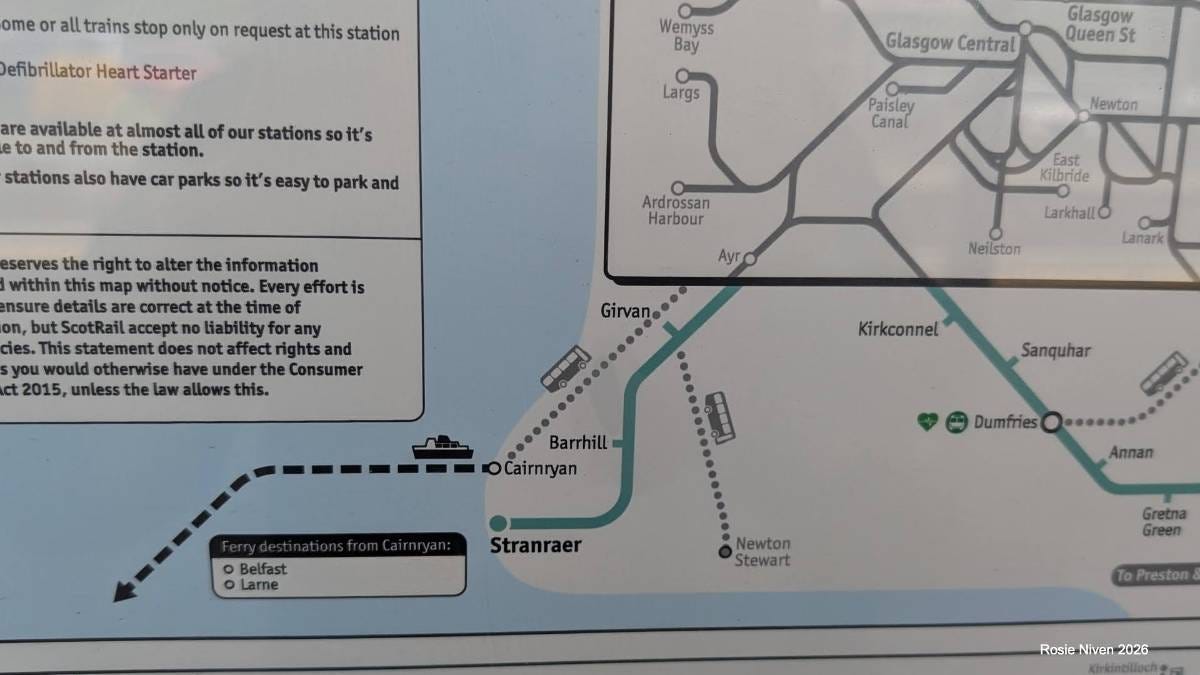
The woman from County Antrim looked at me with pity. I had just told her I’d paid almost £20 for the bus from Ayr to Cairnryan. She, like almost everyone else on that bus, had a through ticket from Ayr or Glasgow all the way to Belfast.
Unlike them, I was travelling on P&O’s service to Larne, which offered no such ticket. This bus would only drop off at the Stena terminal before continuing to Stranraer. It wasn’t the first time I’d wondered if choosing P&O westbound and Stena eastbound had been a mistake.
But worse was to come.
“How are you getting to the P&O terminal?” she asked casually.
“I was thinking of walking,” I replied. “It’s not far, is it?”
“It’s about a mile,” she said.
One mile? I could do that in half an hour, though I was slightly surprised at the distance. Surely Cairnryan was a small place? Once on the bus, I checked Google Maps and quickly realised I’d underestimated the walk. It was closer to 50 minutes, leaving very little time before check-in closed.
I expected some transport hiccups on this project. After all, the idea was to retrace historic ferry routes using only public transport. But I didn’t expect quite so many problems on the first two legs. It quickly became clear that, on these routes, public transport is far from joined up.
Of the two, the journey from Ardrossan to Larne was by far the worse. Once linked by a single ferry, it now takes around seven hours, involving two trains, a coach, a ferry, and, unexpectedly, a car, which I’ll come to shortly.
When planning, I focused on two things: booking the ferry and making sure I could physically reach it in time from Ardrossan. But as I looked more closely, I realised I’d been a little blasé about the land portion of the journey.
I chose the 4pm ferry so I could reach my accommodation in Belfast at a decent time that evening. The recommended route from Ardrossan took just 2 hours 16 minutes, getting me to Cairnryan for 2:30pm. It involved a train to Ayr, changing at Kilwinning, followed by a non-stop coach to the Stena terminal.
However, changing at Ayr required a 10-minute walk, and the connection interval was only 20 minutes. While a bit of urgency might add drama to the story, I didn’t want unnecessary stress, or to miss the bus due to a delay.
After more research, I opted to travel from Ardrossan South Beach rather than the Harbour. That gave me nearly an hour in Ayr to transfer and grab lunch.
‘Punished’
With the route sorted, I went to book the coach, only to find it cost £17, plus £2 for a seat reservation. Had I been travelling with Stena, I could have bought a “Rail Sail” ticket all the way to Belfast, a legacy of the old Sealink integration with British Rail. (And while we’re on that subject, why aren’t there more direct trains to Stranraer from Ayr or Glasgow to meet ferry shuttle buses? It’s no surprise that Stranraer was once described as “one of the most punished towns in the UK, in transport terms”.)
With everything running to plan, I arrived in Ayr on time and walked straight to the bus station. The shops were tempting, especially a market stall selling delicious-looking cherries, but I resisted. The bus station itself was depressing, with broken information screens and a locked toilet, so I grabbed lunch instead of waiting there. A very appealing Italian gelato shop also tested my resolve; again, I resisted.
I waited at the assigned stand. Several local buses came and went, along with a long-distance service to Glasgow. It was here that I spoke to the woman from County Antrim, who was returning from Gleneagles. She worked for a university and regularly used the Belfast ferry, despite living closer to Larne. Given what I was discovering, I could understand why.
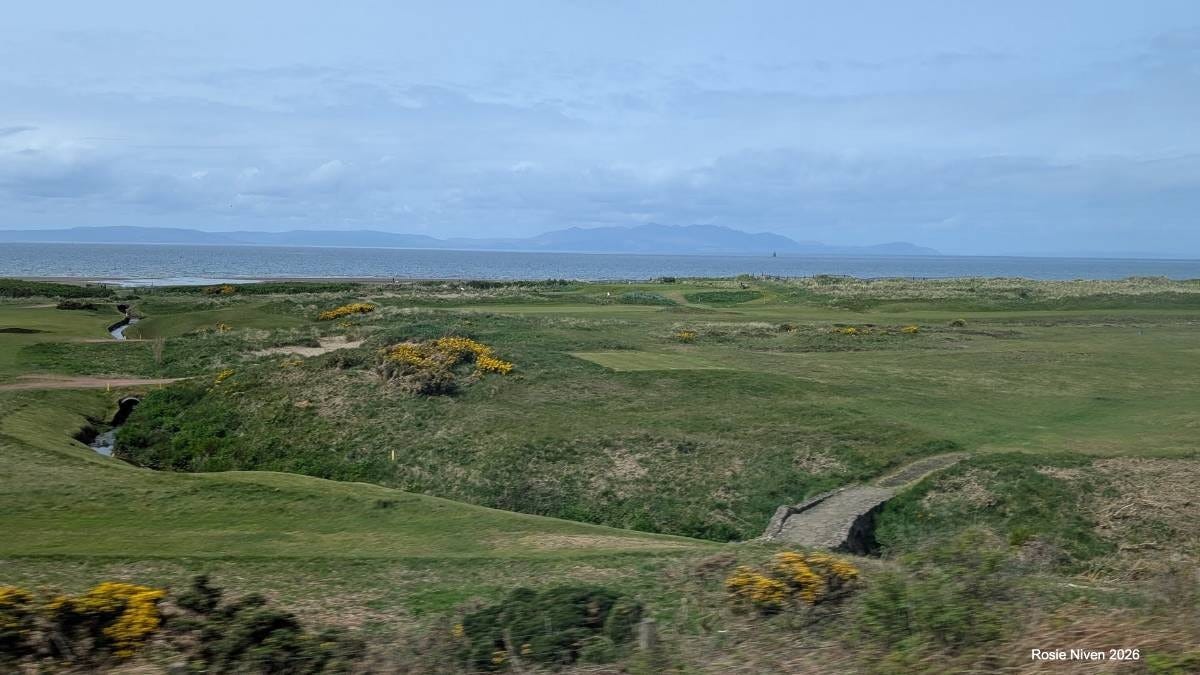
Despite arriving almost 20 minutes late, I couldn’t fault the Citylink 923 service to Cairnryan. It’s a beautiful coastal journey, passing golf courses, gorse bushes and bluebells. We also passed Trump’s resort at Turnberry.
We were late arriving at the Stena terminal, where I made my first attempt to secure onward transport. I asked the driver if he could drop me opposite the P&O terminal on the way to Stranraer.
“I’m sorry,” he said. “I used to do that, but now we’re not allowed. There was… an incident.”
He suggested calling a taxi using numbers posted inside the terminal, but when I tried, nothing was available until 3:45 - just before the ferry departure. The bus was due at 3:15, and although the journey was short, it felt too tight. My half-hearted attempt to persuade some Rangers fans waiting for a pre-booked taxi didn’t go well either.
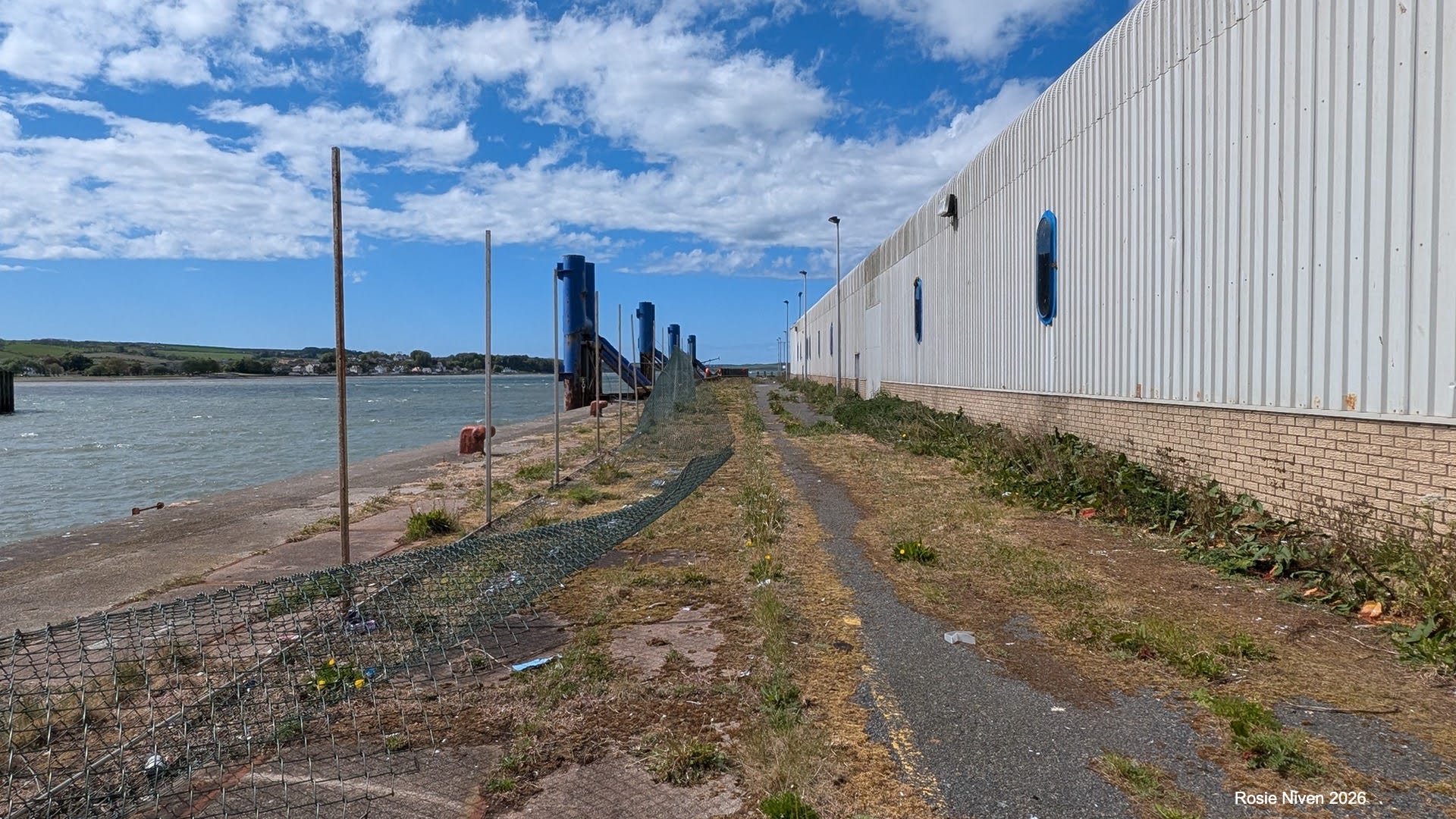
What I was experiencing was the opposite of joined-up transport. Until 1973, both the Larne and Belfast ferries departed from Stranraer, just a short walk from the station. That arrangement continued for Belfast passengers for almost another 40 years. Now both terminals sit miles away, requiring a bus from Stranraer station, or the 923, which, as I’d discovered, is no use if you’re travelling with P&O.
Put bluntly, the P&O service is not set up for foot passengers. Local bus timings don’t align with the ferry, the 923 won’t stop there, and, unlike Stena, there’s no integrated ticketing.
This kind of disconnect is common in rural transport, and it’s exactly what proposals for a “Mini Switzerland” aim to fix. The concept, developed by transport policy expert Thomas Ableman, is based on the Swiss model: buses connect with trains, trains connect with buses, and everything meets at the same time each hour. A demonstrator project in Derbyshire’s Hope Valley shows promising results.
(It’s worth subscribing to Ableman’s Freewheeling substack which also covers his own transport passion project A History of Europe in 75 Train Journeys.)
But what about my ferry?
With just over an hour until departure, I set off towards Stranraer, heading in the direction of the P&O terminal. It was a beautiful day, with clear views across Loch Ryan. Had I not been in a rush, I’d have stopped for photos.
About ten minutes in, I reached the village of Cairnryan. Passing a pub car park, I saw a woman getting into her car. As it pulled out, I noticed she was turning right - the same direction I was heading.
I hesitated, then hurried over. She lowered her window.
I asked if she was passing the P&O terminal - and, slightly pathetically, if she could give me a lift.
To my relief, she agreed.
The driver, Lauren, was heading home to a village near Stranraer. The journey was short, barely enough time to explain what I was doing, and I hadn’t expected her to take me all the way to the terminal. But she did.
I thanked her for being part of the journey, and we went our separate ways.
She got me to the ferry. Minutes after I boarded, I watched the bus pull in below. The ferry left ten minutes early.
If I’d waited for it, or walked, I’d have missed the boat - literally.
That day sounds like a logistical nightmare (with a happy ending)