From steamers to pirate radio: the hidden history of an Irish village
Part two of my series on unlikely ports focuses on how a tiny County Louth village evolved from a Victorian tourism pioneer into a clandestine hub for broadcasting rebels.

Carlingford Lough, a familiar location to anyone who listens to the shipping forecast, is a sea inlet in north eastern Ireland, framed by the Mourne and Cooley mountains.
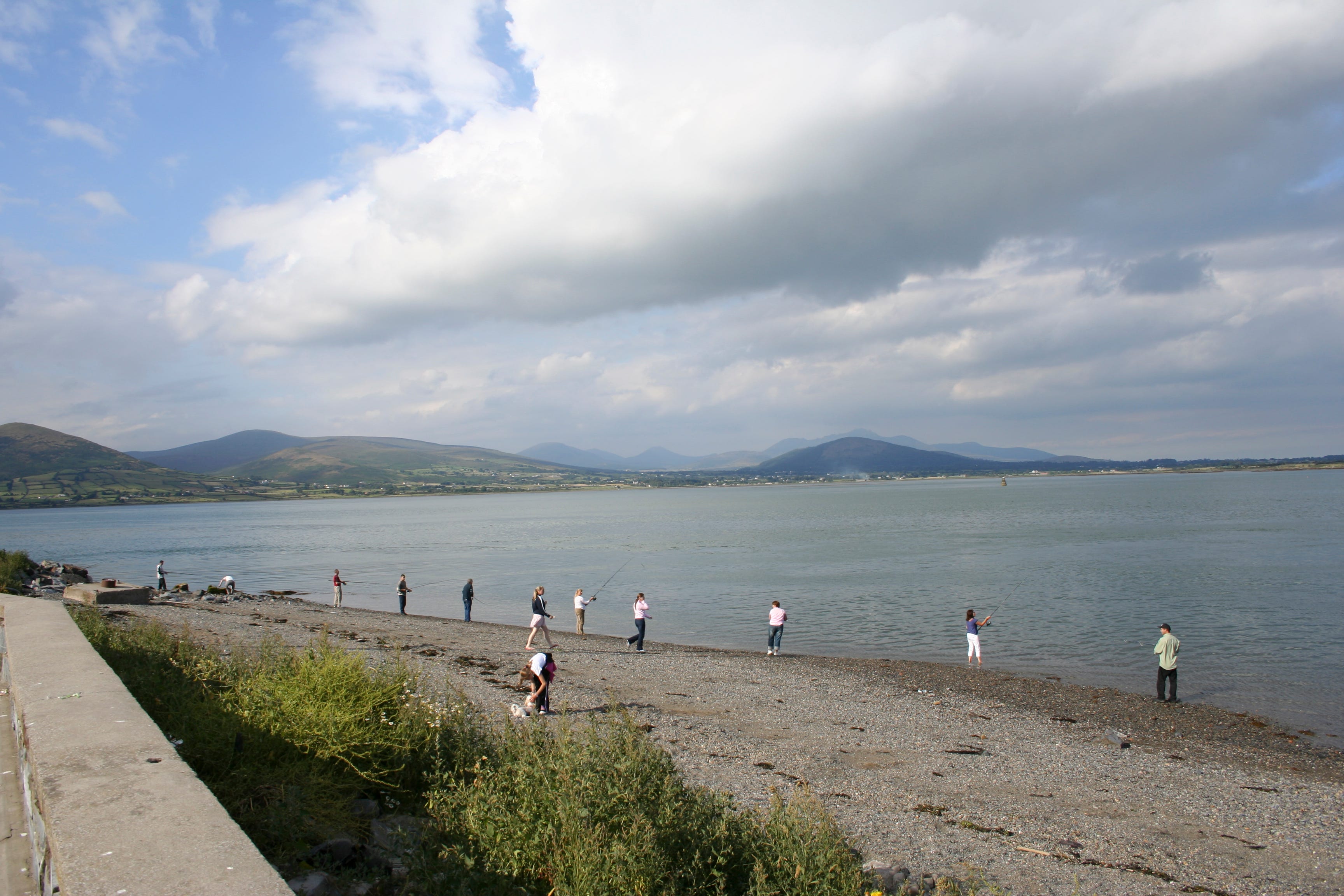
Less familiar is Greenore, a tiny village on the lough’s south western side. When I first read about the port in a book on the history of Irish Sea passenger ships1, my reaction was, “huh?” But when I looked into it more, it became clear that this village of 900 people punched well above its weight, leaving a mark on history far larger than its size suggests.
While the neighbouring town of Carlingford, was founded by the Normans, Greenore’s history is a shorter, but it is extremely rich.
Unlike many towns in Ireland, Greenore didn’t grow organically over history, it was architecturally planned in the 19th Centry. Built in the 1860s, it claims to be the first purpose-built tourist resort in Ireland. Its Irish name, An Grianfort, derived from Grianán, meaning “sunny place” sort of channels the holiday vibe.
A recent report for the History Show, a programme on national broadcaster RTE, visited the County Louth village. Report Elaine Keogh observed: “you feel like you are stepping back into Victorian Times”.
Greenore origins date back to when the London and North Western Railway Company’s (the LNWR) searched for a new port along Ireland’s east coast. Surveyors deemed that Greenore had the best natural characteristics, with deep and sheltered water that were easily accessed.
The village was developed when the railway connecting Newry and Dundalk to the port of Greenore was first opened. It consisted of five different types of workers houses, a police station, a school, a schoolmasters house, a co-operative building and a magnificent Grand Hotel.
From 1873 until 1951 there was a ferry service between Greenore and Holyhead in Wales. This formed part of LNWR’s seamless service from Euston, with onward train services to Dublin and Belfast at Dundalk and Newry. Visitors could stay at the hotel to fish, play golf or take a boat trip on the lough.
‘Monied people’
In an interview with Keogh local historian Brian Larkin, says that photographic sources, suggests that Greenore attracted “monied people”. He describes a poster from 1911 advertising the resort and its easy access from London Euston and other English and Welsh stations to tourists in Britain.
There was also a weekly service to the Isle of Man. “They had joined-up thinking back then,” said Larkin.
After the partition of Ireland - with the border crossing both the lough and the railway - both rail and ferry services went into decline,. From 1926 ,cargo ships ran three times a week with some passengers but from the outbreak of World War II services were cut and no passengers were carried.2 After Irish independence, the railway still operated outside the auspices of the nation’s own railway companies.
Both the ferry and rail service had ended by 1951. In transport writer Laurence Liddle’s book on Passenger Ships of the Irish Sea he observes that the ferry service “had never been a great success”, even before partition3.
But after the ferry went, a new chapter opened in Greenore’s history. In 1964 the port was used to fit out ships used for pirate radio stations, notably Radio Caroline and Radio Atlanta, (previously the Fredericia and the Mi Amigo) which helped to transformed UK radio and pop music.
‘World famous’
The Port had been purchased by Aodhogan O’Rahilly in 1959 whose son Ronan was co-founder and mastermind of the floating radio stations, which were fitted out in one of the berths at Greenore port. When the renamed MV Caroline left Greenore for the North Sea, she gatecrashed the UK airwaves and became world famous. She launched the careers of DJs such as Tony Blackburn, Johnnie Walker and Tommy Vance, eventually leading the BBC to launch Radio 1, in part to compete with the pirate radio upstarts.
By the 21st century, the port had new owners having been acquired by Doyles Shipping Group in 2014. It is now the only privately owned deep water port in the Republic of Ireland and plays a very significant role in the Irish economy.
Since the 1970s Greenore has become a focus for freight shipping with cargoes including bulk animal feed, feed chemicals, fertiliser, rock, steel, woodchip and general cargo such as wind turbines. An Bord Pleanala, Ireland’s strategic planning and appeals body, has described the port as one of Ireland’s “critical infrastructure assets”.
Alas, the new century spelt the end for Greenore’s magnificent hotel which was demolished by the current owners of the port, despite recommendations from both An Bord Pleanala and the County Louth conservation officer that it be put on the Protected Structures List.
But Greenore’s location at the tip of the Cooley Peninsula with spectacular views of the Mourne and Cooley Mountains, along with its unique architecture, would still offer a lot to visitors. The approach into the lough after a crossing from Holyhead must have been stunning.
And according to the History Show, a new cross-border car ferry will be opening soon. This journey from Greencore to Greencastle on the opposite shore will hopefully offer visitors a glimpse of times past.
With these new transport connections, it’s looking like the “the sunny place” has a bright future.
Passenger Ships of the Irish Sea 1919-1969, Laurence Liddle, pp 36-37
Liddle, p 36
Liddle, p 10