Standing on the empty platform
Finding connection, conversation and a sense of revival in the places left behind after the ferries went.

There is a melancholy silence that hangs over a ferry berth where passengers no longer tread. Standing on the empty platform at Stranraer Harbour railway station, it’s hard to imagine crowds of passengers moving to and from the ferry and Glasgow and Ayr-bound trains.
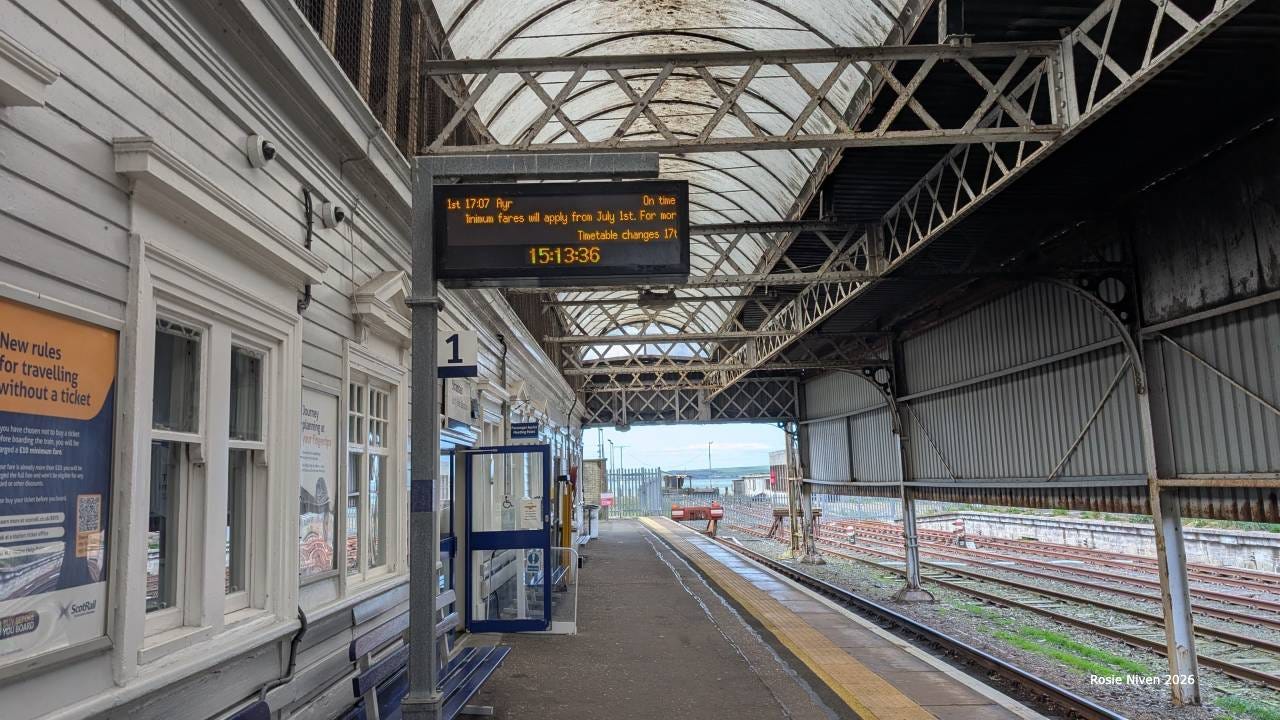
Where once there were queues of cars, now there are weeds and a bottle of urine. But compared to travel writer Sarah Baxter, I got off lightly. In an article for the Telegraph she recalled having to step round a dead seagull, “splayed like an unsubtle metaphor for coastal decline”.
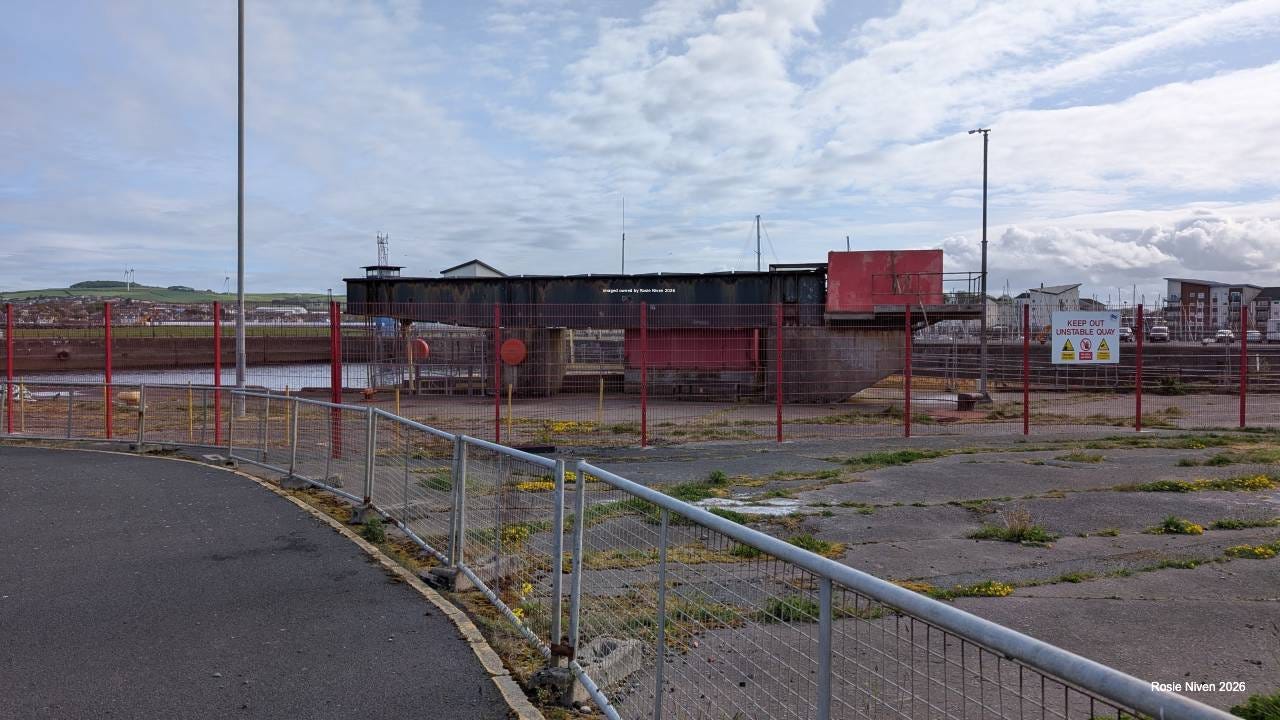
This platform was my final destination, marking the completion of the first two stages of my ferry project. Stranraer was one of two ‘ghost terminals’ I visited on that trip. Both were defined by a similar decay; with time turning metal fences into orange lace and weeds slowly eating their way through the concrete.
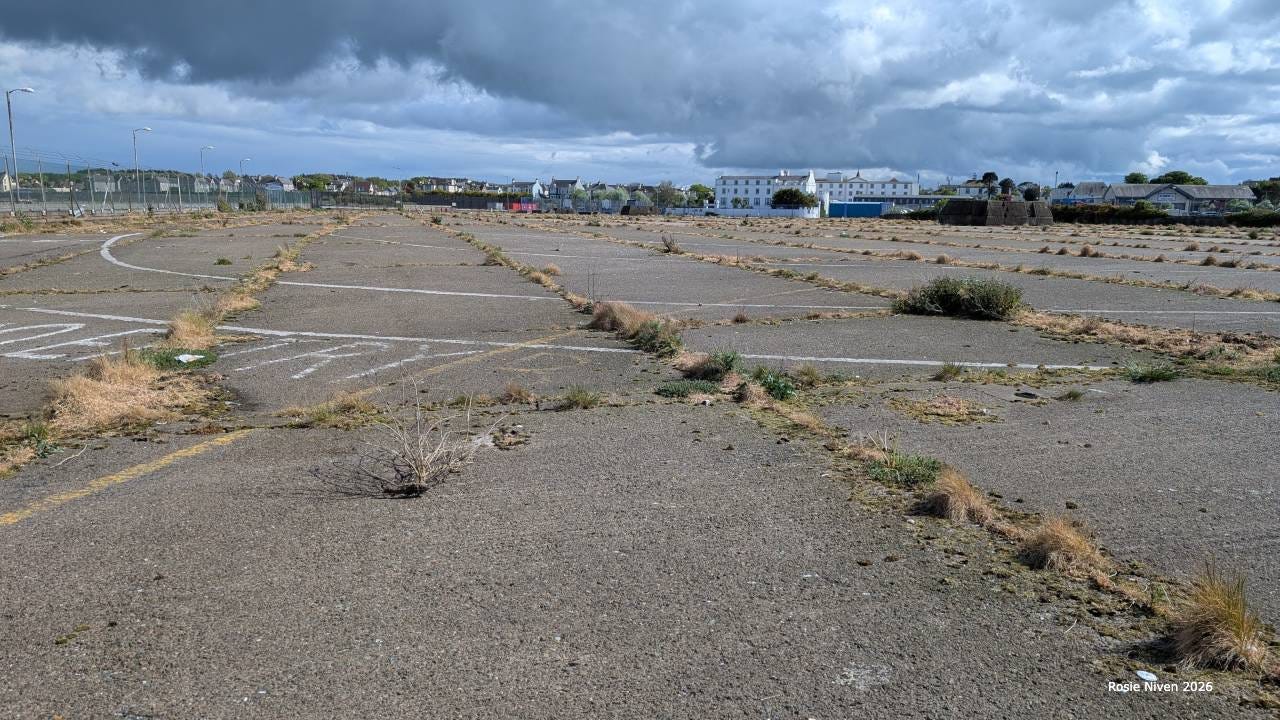
The first leg took me from the “Irish Quay” in Ardrossan, Scotland to Larne in Northern Ireland, retracing a route that closed in 2001 after a relocation to Troon. The following day, I returned to Scotland from Belfast. This brought me to that platform at Stranraer, a space that feels eerily quiet compared to what it would have been like before 2011, when the Stena terminal relocated to Cairnryan.
This project, as yet unnamed, has occupied my thoughts for over a decade. What sparked the idea was researching a holiday to Belgium. I discovered that a ferry route I had previously considered, via Ostend, had simply vanished. It made me realise how many crossings I had taken in the past are now defunct, or downgraded, including routes serving mainland Europe like the Croatian coastal ferry I travelled on in 2004. After browsing travel forums and reading similar comments on various blogs, I realised I was not alone in this sentiment.
A full-time job and the demands of parenthood made it difficult to begin this project. But this year, I realised it was now or never and started planning in earnest. Part of my motivation was professional: I missed the research and writing I had abandoned after leaving journalism over ten years ago. I currently work in university communications supporting researchers. While a journalist’s work is rarely as rigorous as academic research, I often found myself longing to apply those skills to my own independent project.
Another motivation was more personal - I wanted to escape the cycle of doom-scrolling and reduce my screen time. The irony of pursuing that goal by writing a newsletter is not lost on me.
One month in and this project has already pushed me out of my comfort zone and introduced me to fascinating people. I spoke with Sharon, Robin, Chloe, Sean, Maureen, Paul, Jim, Jamie, and Heidi. I am particularly grateful to two strangers, Lauren and Marina, who offered me lifts and saved me from missing a ferry and a train.
Beyond the interviews, I spoke to a lot of fellow travellers who were fantastic company. Some were interested in the project but do not use the same social media platforms I do. That realisation was a major factor in my decision to start this newsletter. It is now becoming a space to connect with others who have their own memories of these lost routes, and it is clear that people hold deep, personal connections to these transport links.
While there will certainly be nostalgia and a little sadness in exploring these places, I also want to shine a light on some green shoots of revival. Speaking to Robin and Chloe in Ardrossan, there is a lot of pride and optimism about the area, although there is still concern about the future of the Arran ferry. And Stranraer is in the midst of a reinvention with a popular annual Oyster festival and as the centre for Scottish curling.
This spirit of reinvention is exactly why I want you to be involved. My plan is for subscribers to have some influence over at least one or two of the routes I am considering and I hope this project will evolve to include some of your own stories.
Do you have a personal ‘lost route’? A journey you used to take that no longer exists? Or a ferry service that holds a specific memory for you? If you do, reply to this email or leave a comment below. I want to build this map of forgotten sea journeys with your help.
And I am also planning a poll to nail down a name for this project, and this newsletter. More on that soon.